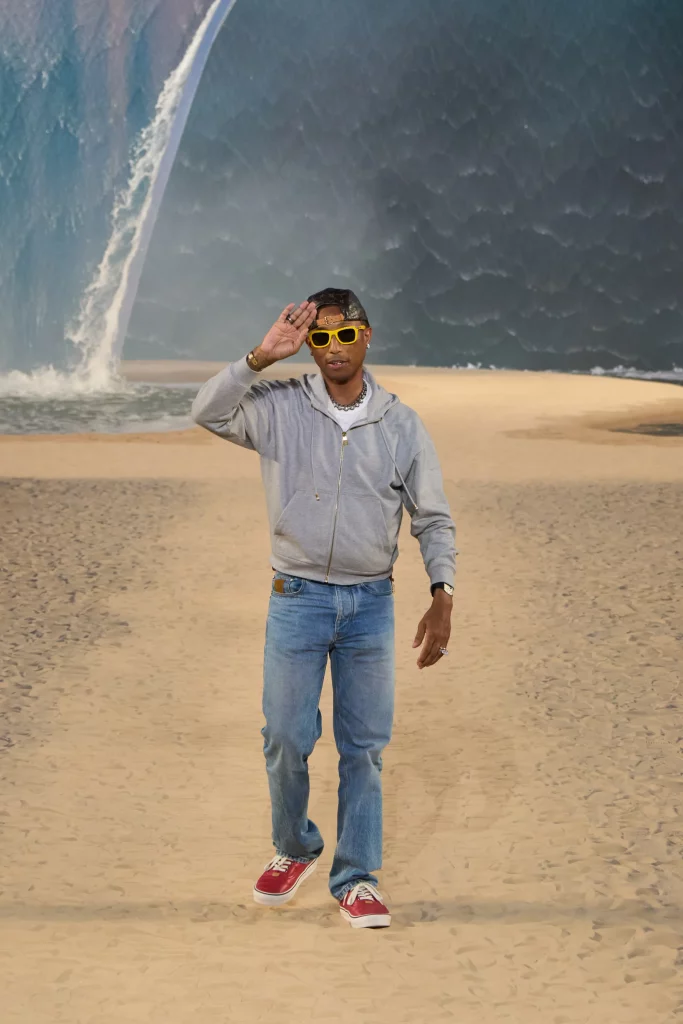
Pharrell does not design collections, he engineers moments, and for Louis Vuitton Spring Summer 2027, he delivered one that felt impossible to ignore.
We were there, and from the second you stepped in, it was clear this was operating on a different frequency. Sand stretched across the floor, waves echoed through the space, and a towering water installation rose in the middle of Paris like some surreal mirage. It did not feel like a runway, it felt like an environment, fully immersive and entirely intentional.
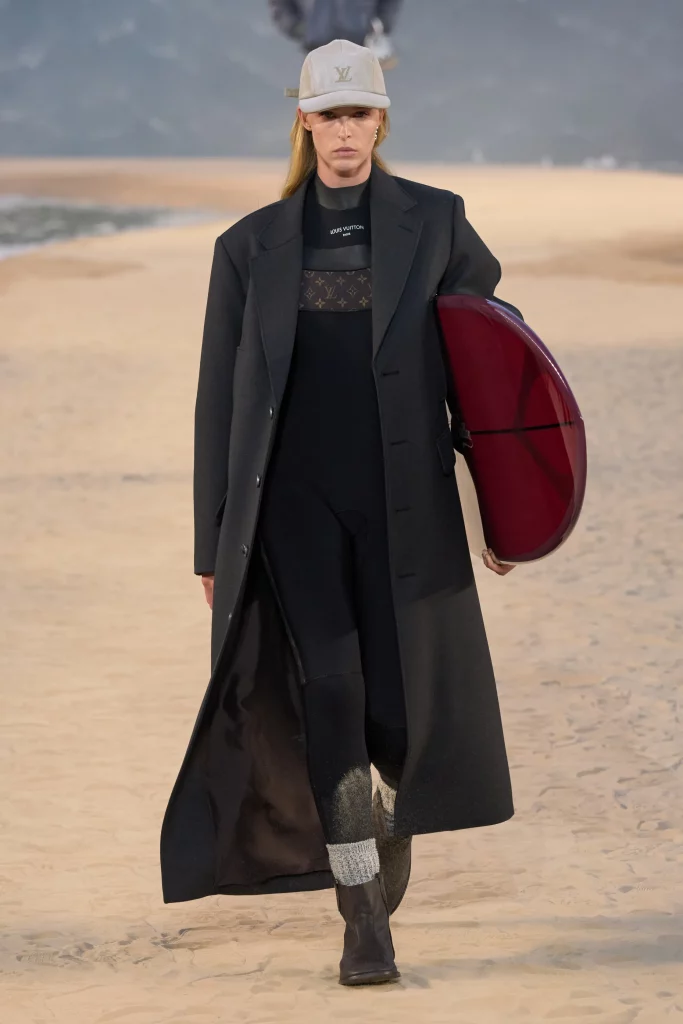
Pharrell has never been interested in playing by traditional fashion rules, and at Louis Vuitton, he continues to reshape what a show can be. This season leaned into surf culture, but not in any obvious or predictable way. It was not costume, it was not nostalgic, it was filtered through luxury and sharpened into something far more considered.
The front row reflected that same collision of worlds. Not just celebrities, but cultural figures who exist across music, sport, and fashion, all sitting within the same space without it feeling forced. It is something Pharrell does instinctively, building a room that feels relevant rather than assembled.
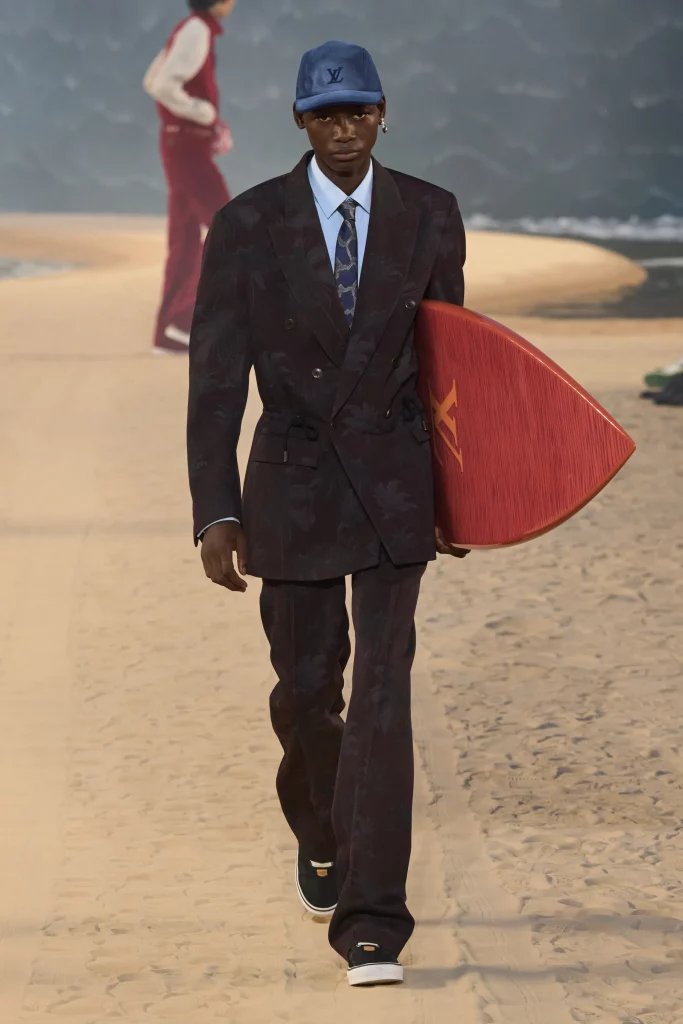
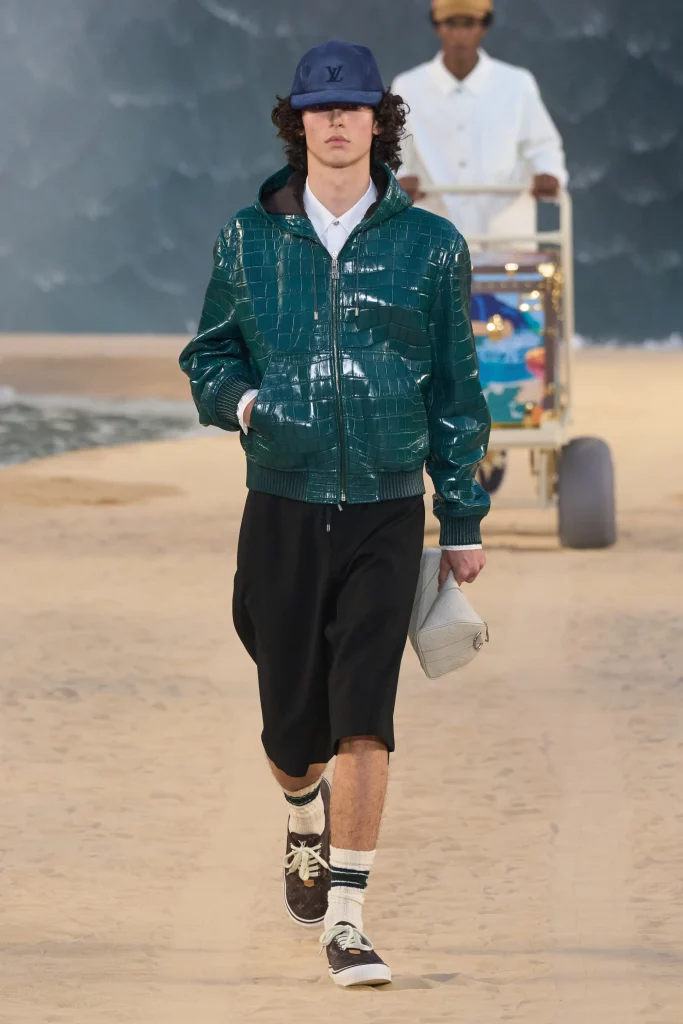
When the collection landed, it carried that same energy. Denim came through sun faded and salt worn, deliberately imperfect in a way that felt lived in rather than distressed. There was an ease to everything, hoodies layered under relaxed tailoring, leather details woven into knits, silhouettes that moved between skate and structure without ever committing fully to either.
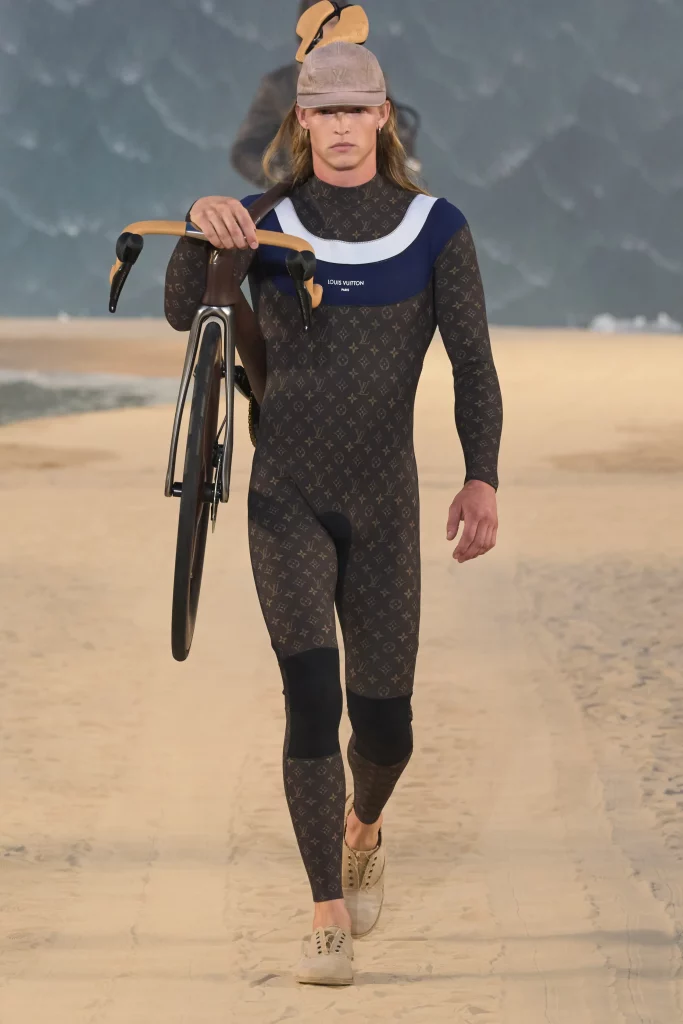
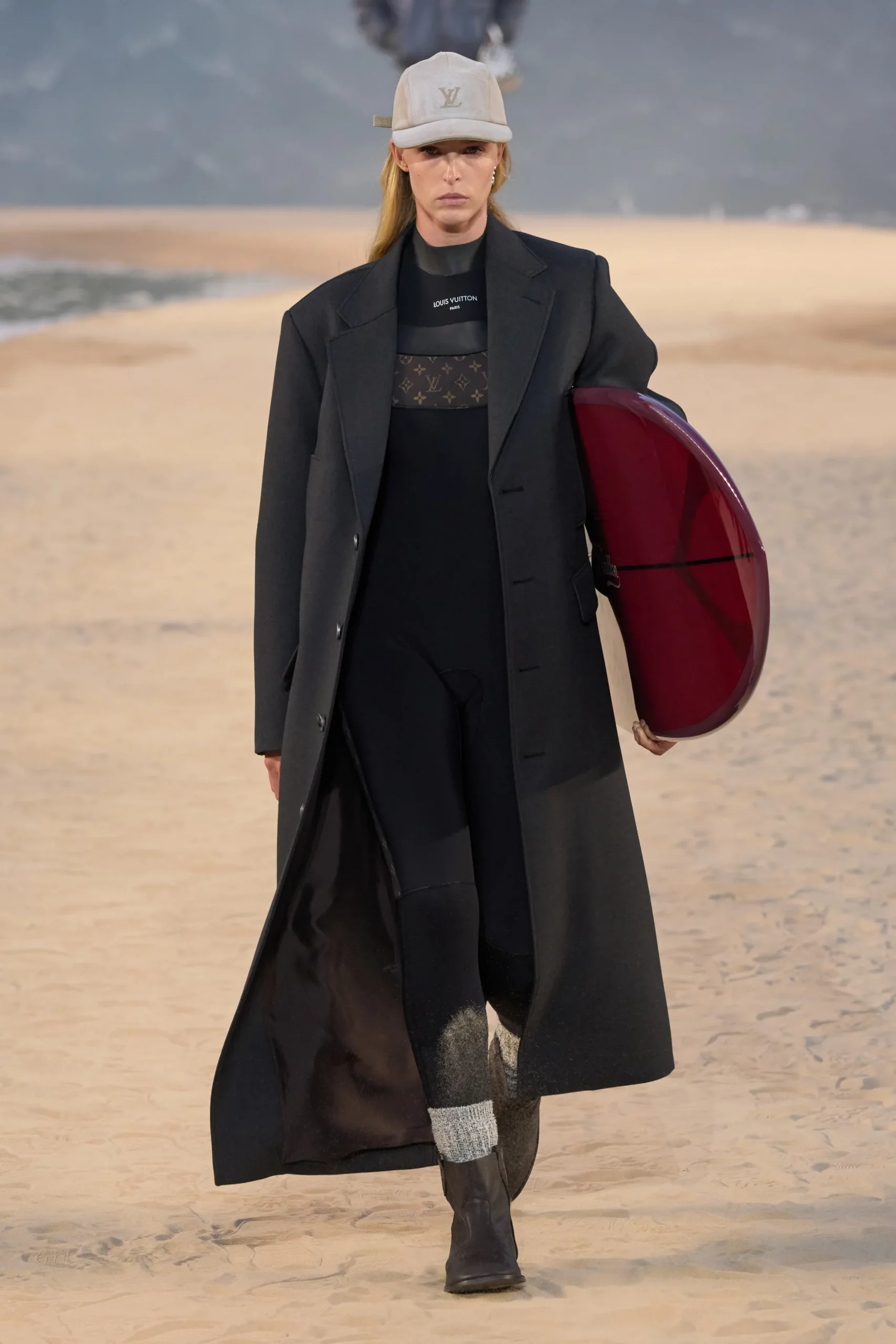
There were clear references to surf, from wetsuit inspired cuts to flashes of athletic detailing, but they were always pulled back into something sharper. This is where Pharrell understands Louis Vuitton, allowing the collection to flirt with freedom while still holding onto precision.

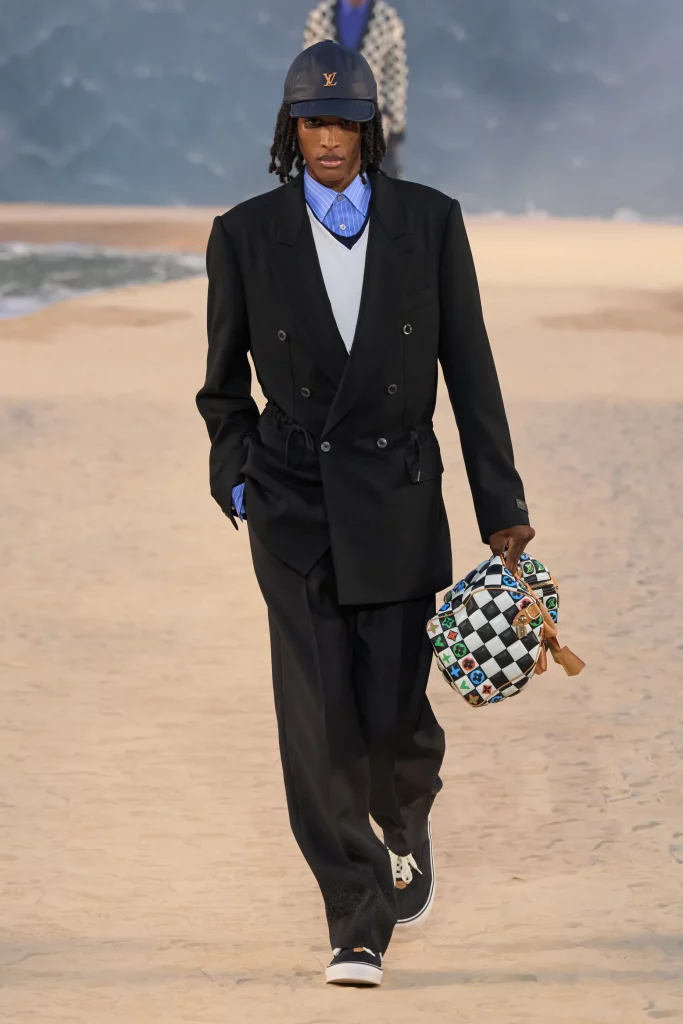
Accessories played their part in amplifying the narrative. Monogram bags shrunk down, surfboards carried as objects of desire rather than function, each piece designed with the awareness that fashion now exists as much on screen as it does in real life. Nothing felt accidental, everything felt built for conversation.

Footwear followed the same rhythm, low cut silhouettes nodding to skate culture but elevated enough to sit comfortably within luxury. These were the kinds of pieces that do not just exist within a collection, they move quickly beyond it, shaping how people actually dress.
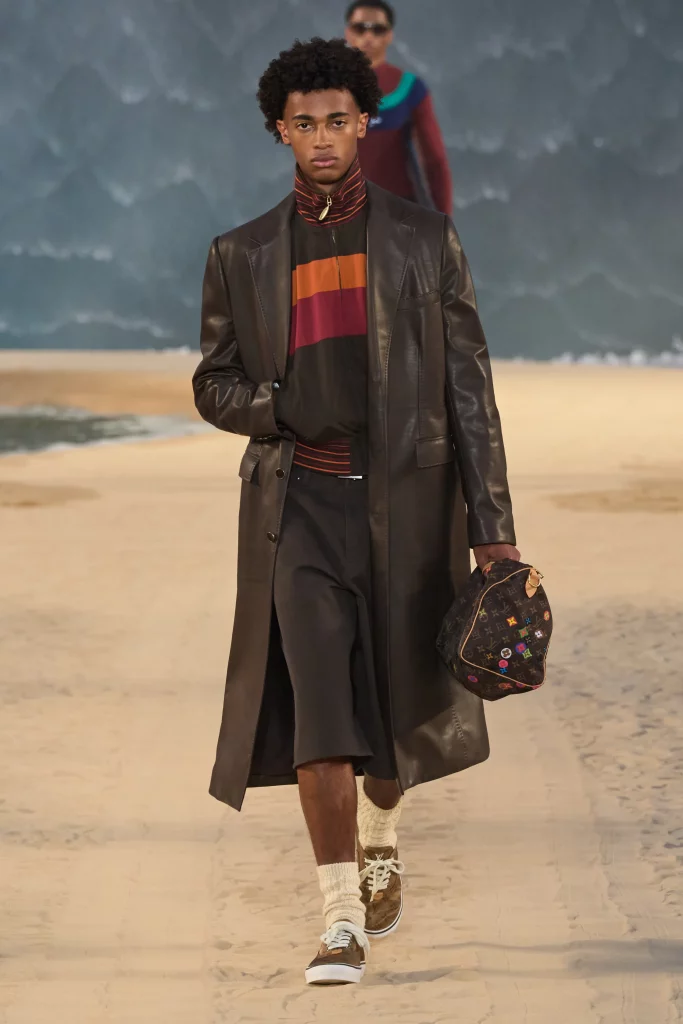
What sat underneath it all was a broader idea of lifestyle. A man who moves between spaces, between city and coast, between discipline and ease, someone who does not feel the need to choose one identity over another. That fluidity ran through every look without needing to be overstated.
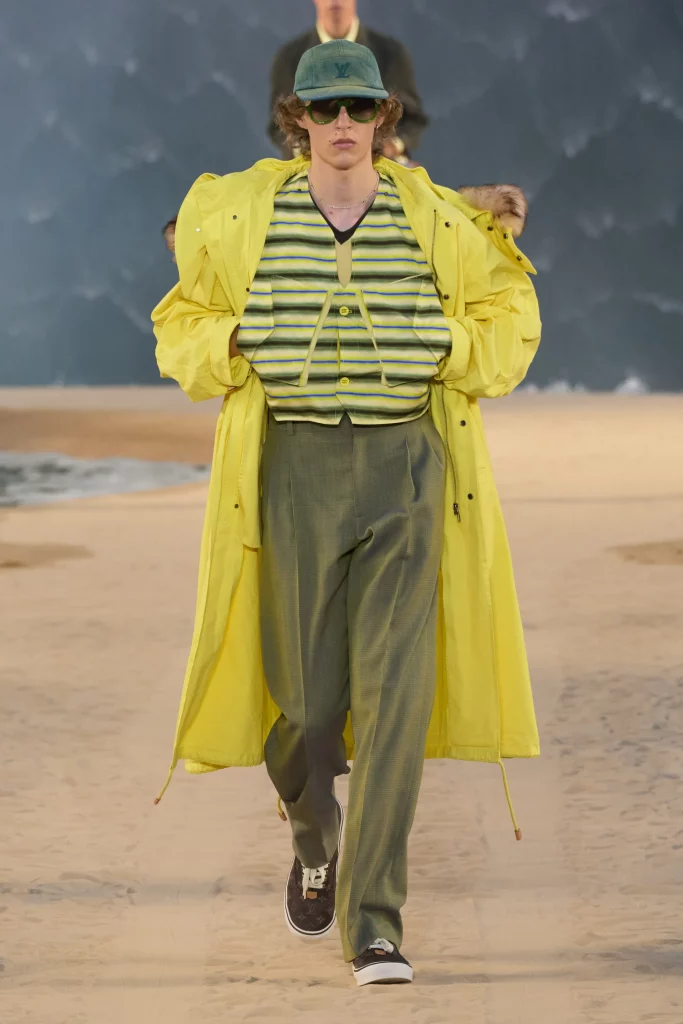
Even the set design carried a quieter layer of intention, with elements built to be reused and reimagined beyond the show itself. It was subtle, but it grounded the spectacle in something more considered, giving the moment a sense of purpose rather than just impact.
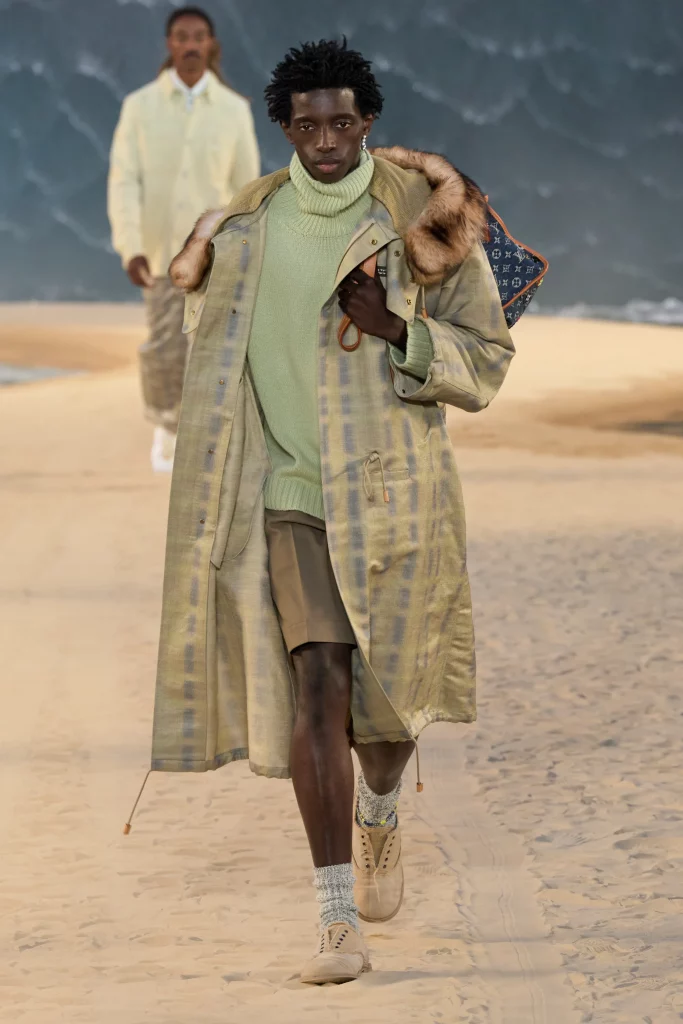
Pharrell’s strength at Louis Vuitton lies in the way he understands culture as a whole rather than just fashion in isolation. He does not chase relevance, he operates within it, pulling together influences in a way that feels natural rather than constructed.

As the final looks moved through the space, there was a sense that this was less about surf culture and more about a shift in how luxury is being defined. Less rigid, more fluid, rooted in experience as much as aesthetics.
Pharrell is not just presenting collections at Louis Vuitton, he is shaping how the brand exists in the world now, extending it beyond the runway and into something that feels immediate, expansive, and entirely current.