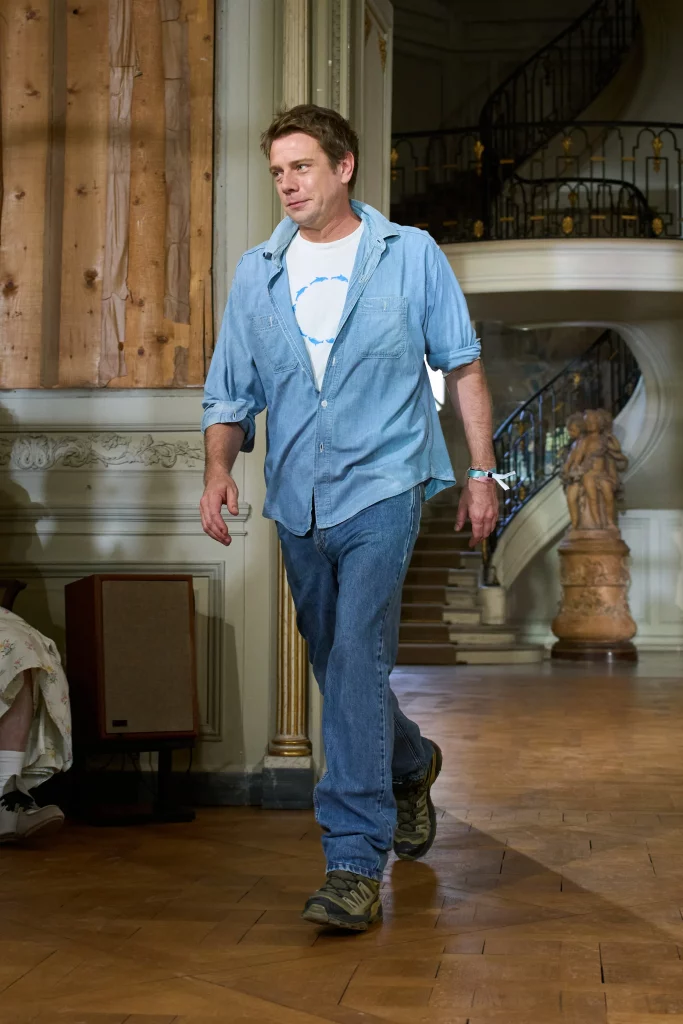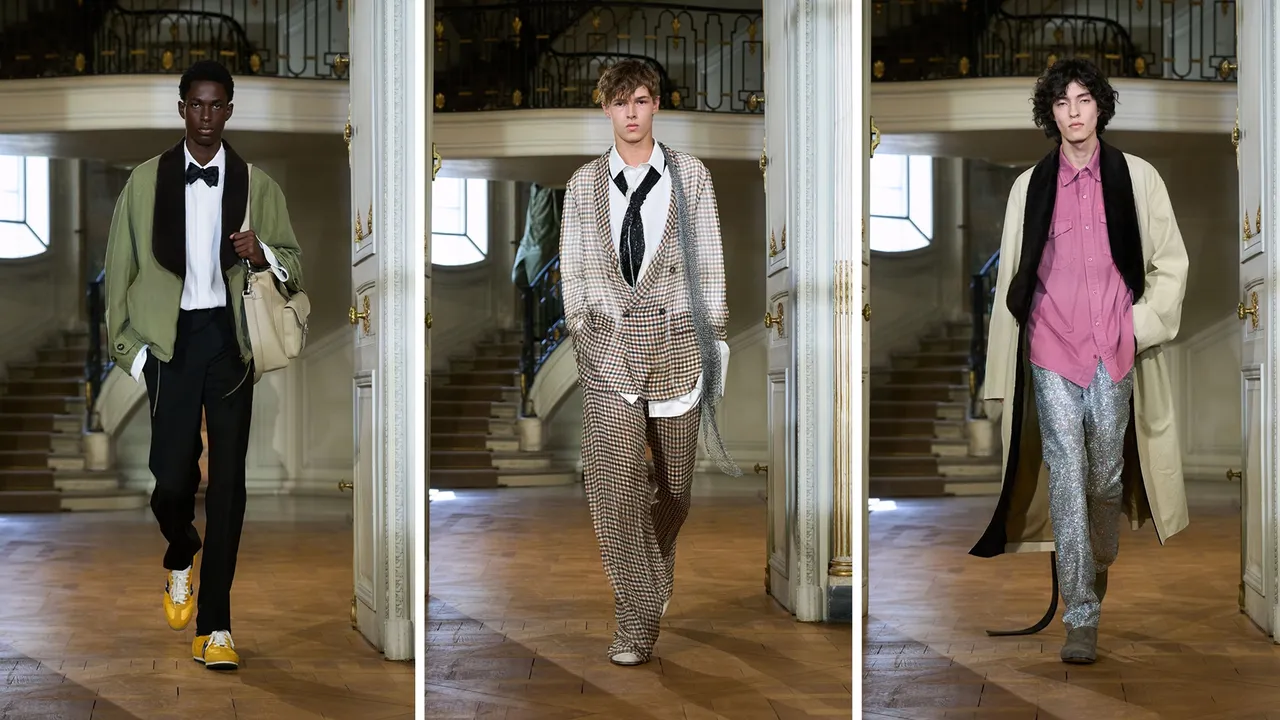
Paris, mid heatwave, and yet inside the world of Dior Men everything felt controlled, intentional, almost unnervingly precise. This was not a show chasing noise or virality, but one refining a language that has been quietly shifting under Jonathan Anderson’s direction. What we are seeing now is not a reinvention but a recalibration, a move away from obvious spectacle towards something far more nuanced, a study in restraint, sensuality, and the evolving shape of modern masculinity.
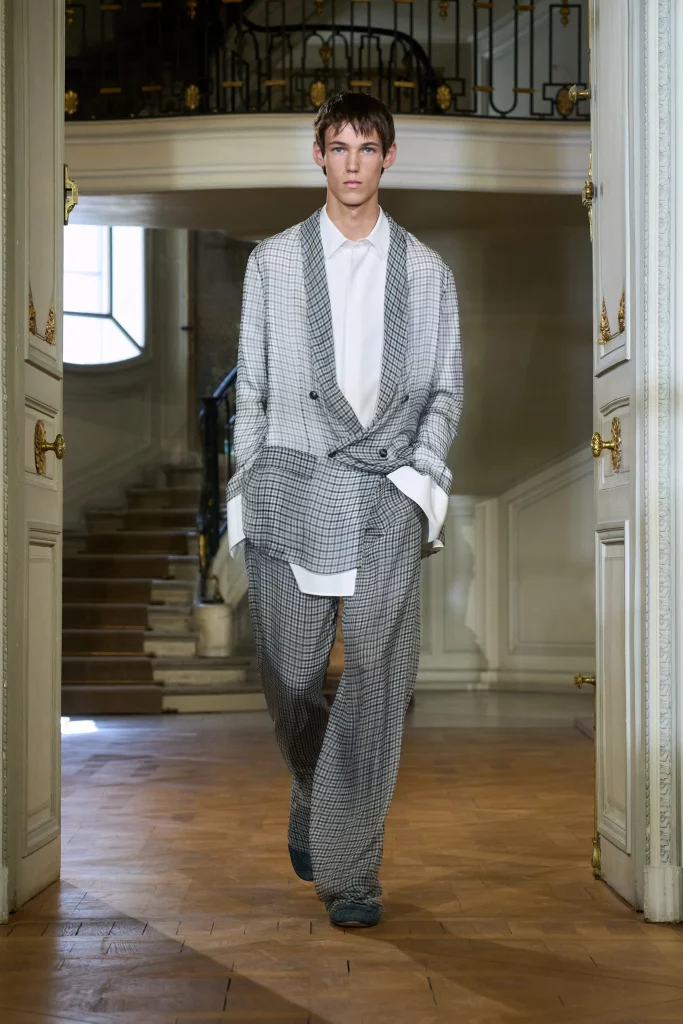
There was a noticeable softening this season, though not in any way that felt fragile. It was assured and deliberate. Silhouettes skimmed the body rather than imposing structure onto it, and tailoring, still unmistakably Dior, felt lighter, almost undone in places. Jackets were cut with precision but worn with ease, as though the man inside them had nothing to prove. There was a quiet confidence in the way everything moved, a sense that effort had been edited out rather than added in.
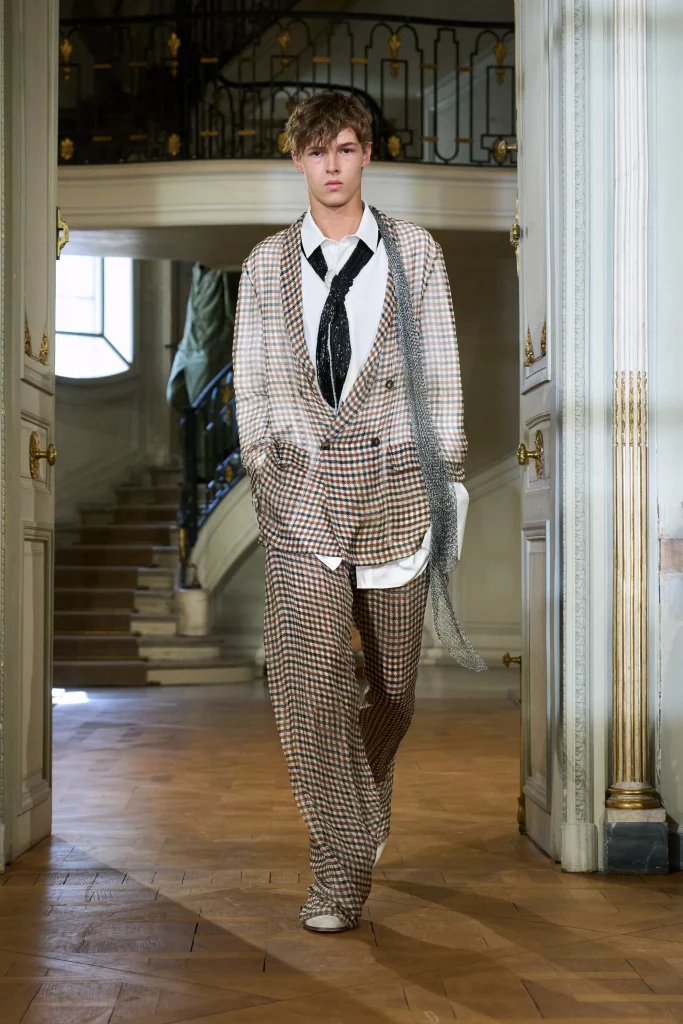
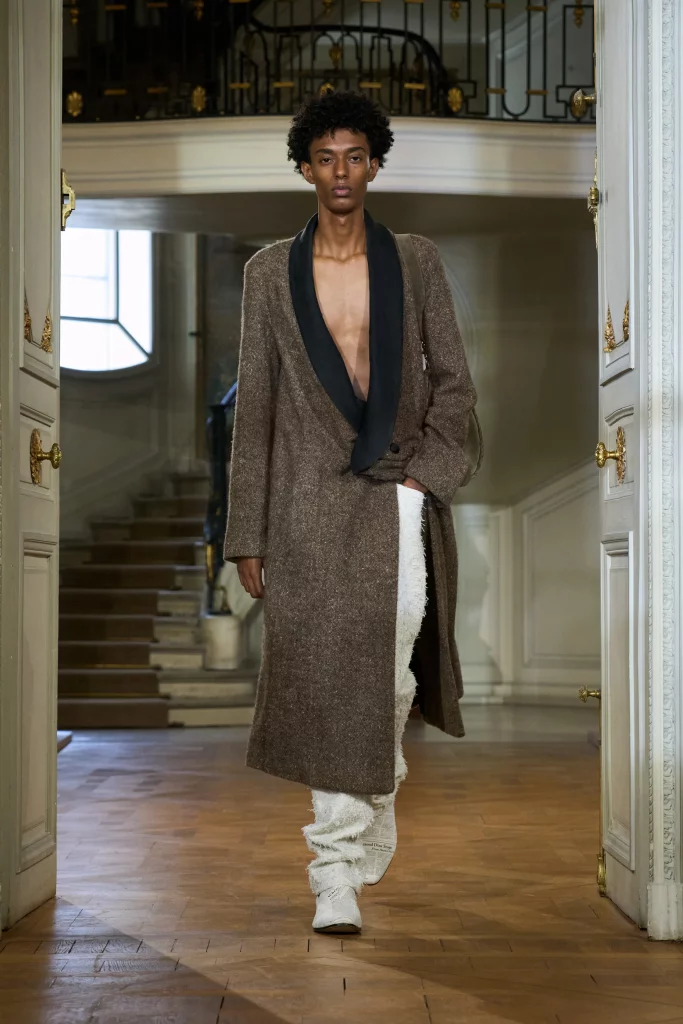
And then, the skin. The return of the scoop neck, deeper and more deliberate, ran through the collection like a subtle provocation. It nodded to a kind of early 2000s sensuality, but without nostalgia or irony, instead reworked into something instinctive and modern. Sheer layers and fine knits clung just enough to suggest the body beneath without fully revealing it, creating a tension between exposure and control that felt entirely intentional. It is a space Anderson seems increasingly interested in, where vulnerability meets precision, and masculinity is no longer defined by rigidity.
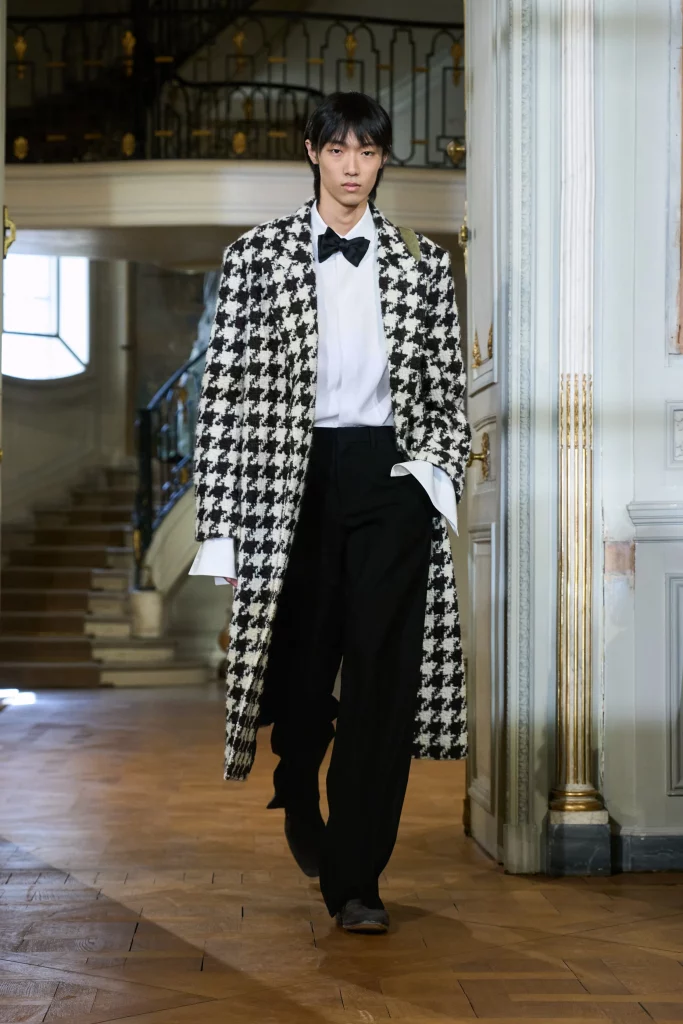
Trousers were slimmer and cleaner, grounding the looks with a sense of discipline, while outerwear carried that familiar Dior sharpness but refused to feel restrictive. Even at its most structured, there was a looseness, a refusal to overwork the silhouette. The palette remained refined, moving through softened neutrals, inky blacks, and occasional quiet moments of colour, allowing texture, cut, and movement to take precedence over anything overtly decorative.
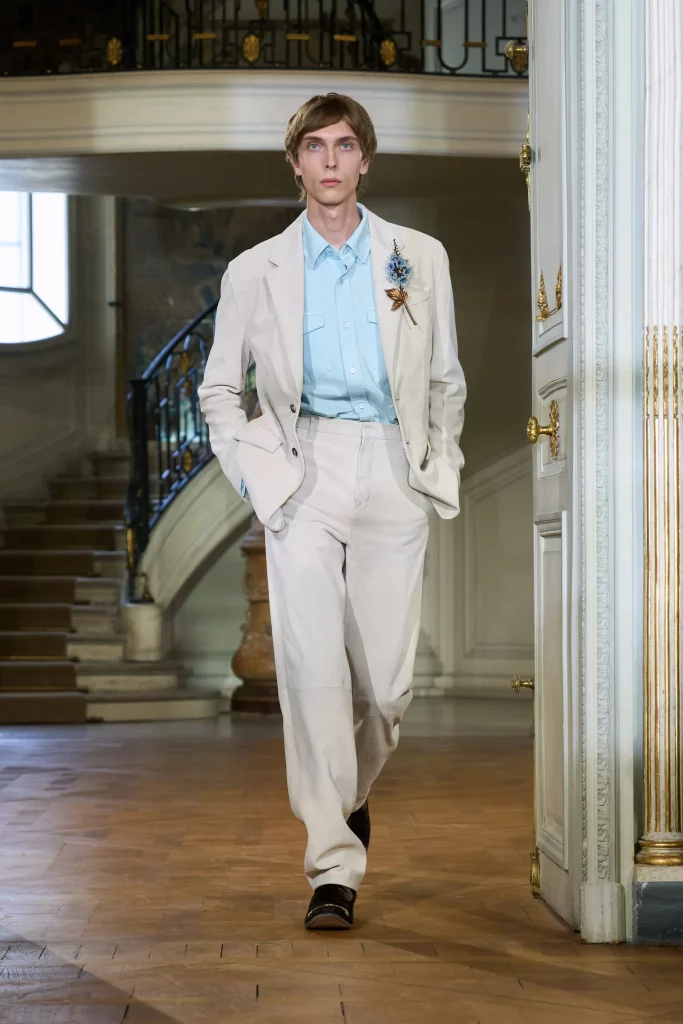
What stood out most was not a singular standout look, but the editing. Knitwear felt like a second skin, embellishment was present but restrained, and fabrics were chosen for the way they moved rather than how they held shape. There was a confidence in holding back, in allowing the clothes to speak without forcing them to shout. It is a discipline that feels increasingly rare, and all the more powerful because of it.
The front row mirrored this same shift in tone, favouring cultural relevance over obvious spectacle. Chiwetel Ejiofor, LaKeith Stanfield, Drew Starkey, Mike Faist, Connor Swindells, Arón Piper, James Marsden and Little Simz formed a cast that felt considered rather than assembled for effect, a mix of established actors and next generation voices who reflect a broader, more interesting definition of influence. It was not about flash, but about presence.
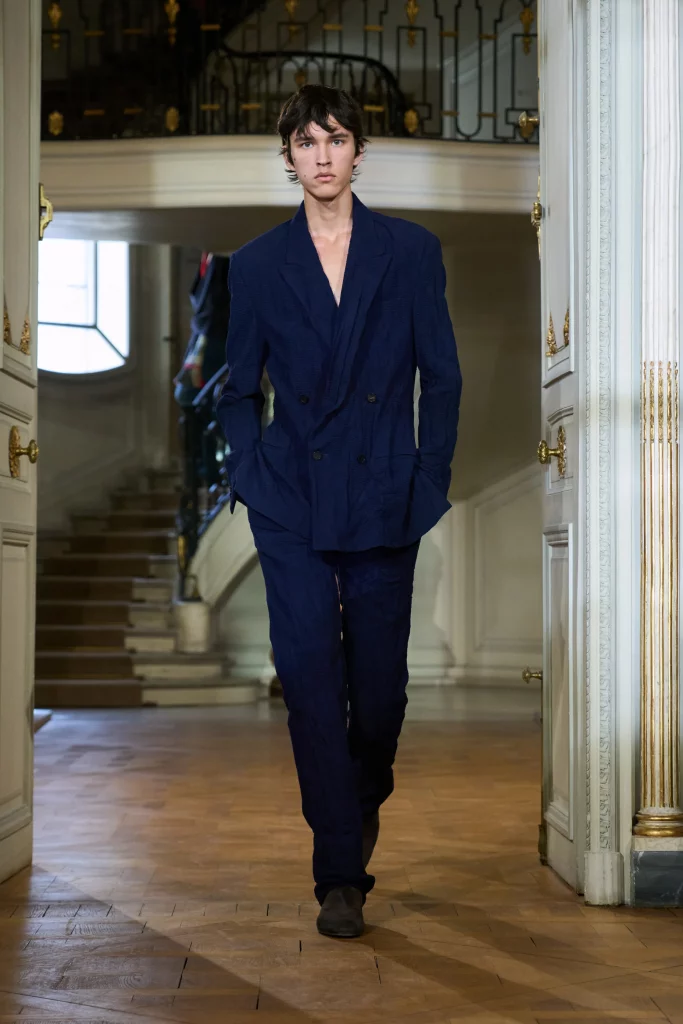
There is something happening at Dior Men right now that resists easy headlines. It does not demand attention, it holds it. Anderson is not tearing up the house codes, he is loosening them, allowing them to breathe and shift with the man wearing them. In a season where so many collections feel the need to overstate their point, this quiet, controlled evolution lands with far greater impact. Dior Men SS27 is not loud, but it is deeply persuasive, a slow, deliberate rewrite of what modern masculinity can look like when it no longer feels the need to perform.